
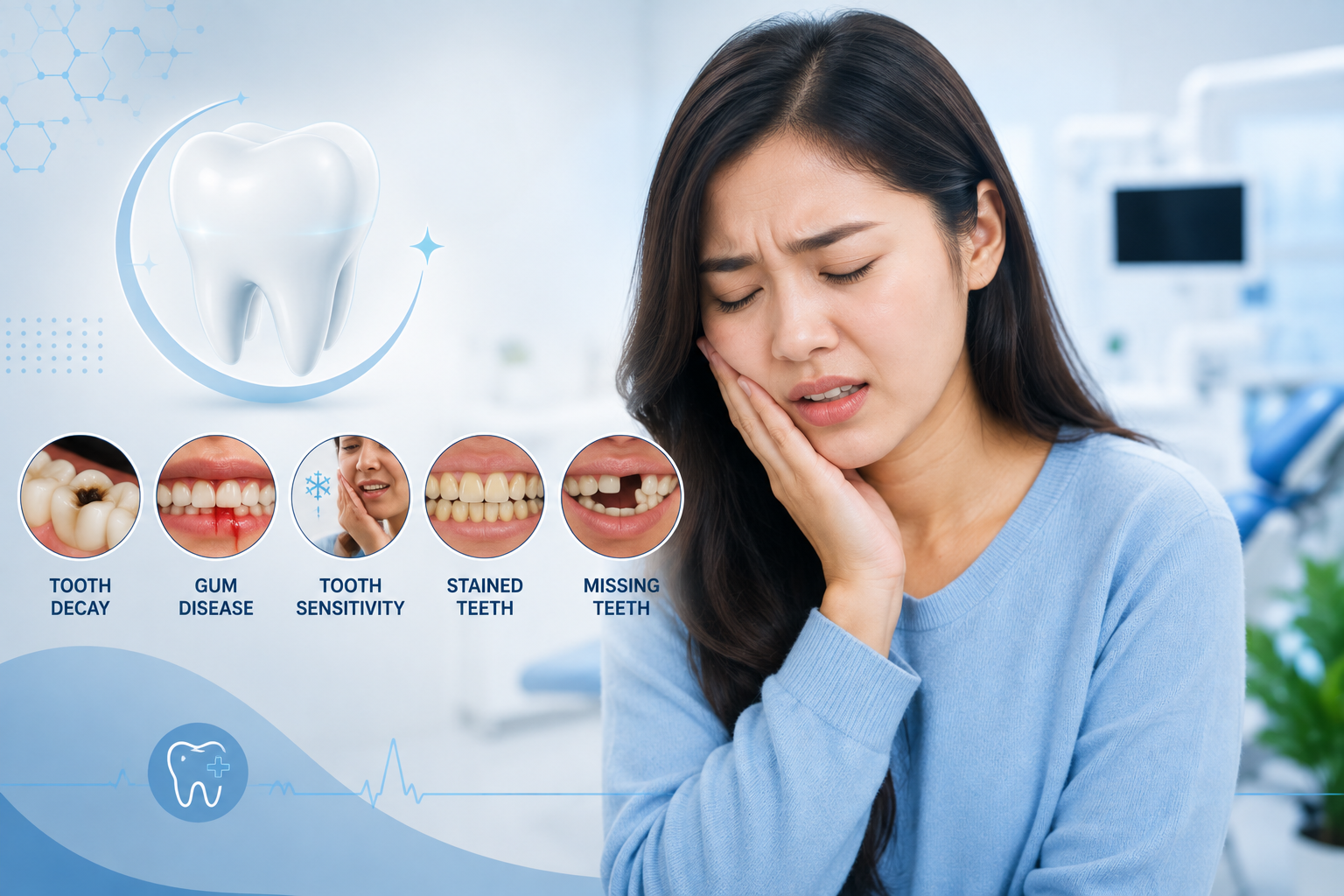
The most common dental problems in Nepal include tooth decay, gum disease, sensitivity, persistent bad breath and tooth loss. Many can be prevented or treated more simply when identified early, before pain or swelling becomes severe.
Why are dental problems common in Nepal?
Oral health is shaped by diet, daily plaque removal, fluoride exposure, tobacco and areca-nut use, access to preventive care and how early a problem is assessed. Frequent sugary tea, snacks and soft drinks can increase decay risk, while delaying care can turn a small cavity into an infection requiring more extensive treatment.
- Brush twice daily with fluoride toothpaste.
- Limit frequent sugary foods and drinks.
- Avoid tobacco, gutkha, paan and areca nut.
- Arrange checkups according to your individual risk.
Tooth decay and gum disease
Tooth decay develops when plaque bacteria use sugars to produce acids that damage tooth structure. Early decay may have no symptoms; later signs include sensitivity, pain, a dark spot, a visible hole or food repeatedly collecting in one place.
Gum disease often begins as gingivitis, with red, swollen or bleeding gums. Untreated disease can progress to periodontitis and affect the tissues and bone supporting the teeth. Early gingivitis may improve with professional cleaning and better home care; periodontitis needs clinical management.
- Bleeding during brushing or flossing
- Persistent bad breath
- Gum recession or tenderness
- Loose teeth in advanced disease

Sensitivity, bad breath and missing teeth
Sensitivity may be related to enamel wear, recession, decay, cracks or exposed roots. Persistent or one-tooth sensitivity should be examined. Persistent bad breath often has an oral cause such as plaque, tongue bacteria, gum disease, decay or dry mouth.
Missing teeth can affect chewing, speech and tooth position. Suitable replacement options may include a bridge, denture or dental implant after assessment.
Oral changes linked to tobacco and betel nut
Tobacco and areca nut are important risk factors for oral disease and oral cancer. A mouth ulcer lasting more than three weeks, a persistent red or white patch, a lump, restricted mouth opening or difficulty swallowing or speaking should be assessed promptly.
When is dental care urgent?
Seek urgent dental or medical care for significant facial or mouth swelling, fever with dental pain, uncontrolled bleeding, rapidly worsening pain, or difficulty breathing or swallowing.
How to reduce your risk
Brush twice daily with fluoride toothpaste, clean between teeth, reduce frequent sugar exposure, avoid tobacco and areca nut, and respond early to bleeding gums, sensitivity or pain. Your dentist can recommend a recall interval based on your needs.
Frequently asked questions
What is the most common dental problem in Nepal?
Tooth decay is one of the most common oral-health problems in Nepal. Gum disease, sensitivity, bad breath and tooth loss are also frequently seen.
Can gum disease be reversed?
Early gingivitis can often improve with professional cleaning and effective daily plaque removal. Periodontitis usually needs ongoing professional management.
When should tooth sensitivity be checked?
Persistent, worsening or localised sensitivity should be examined because it may be caused by decay, recession, enamel wear or a cracked tooth.
When should a mouth ulcer be checked?
Arrange an assessment if an ulcer lasts more than three weeks or appears with a persistent patch, lump or other concerning change.
This article is for general education and does not replace an in-person dental examination, diagnosis or treatment plan. Prices are broad market references rather than fixed clinic quotations. Suitability, cost and timelines vary by individual clinical findings. Reviewed by the Aannapurnaa Dental Clinical Team in August 2026.